Tuesday, February 7, 2012

20 years ago today – Day 341

Friday, February 7th – Palolem Beach

The weather remains perfect here, warm and sunny but not too hot or humid. There are very few clouds so I am happy that the cabins and street leading to the beach are shaded by the tall palm forest. My digestion is still a bit sensitive from the spicy food so I have only yogurt and a banana for breakfast while Frank heads to the restaurant with some of the others we were drinking and smoking with last night.

I walk into the village half a kilometre away, just for something different to do. At least there is some activity here, a change from the beach where the only activity is in the form of gentle waves and breezes. I poke around a couple stores to buy some fruit for later and then stroll back to the beach. A couple travelers are passed out on the sand, perhaps still recuperating from last night, but otherwise the beach is empty. I place my towel on the sand not too far from them and read my book.

I pass the rest of the morning here, until Frank comes to ask if I will join him for lunch. I do. Afterwards I feel the need to rest and return to our room for a nap. I sleep for most of the afternoon. I am not sure why I am tired all the time here. Perhaps I am not used to the drugs or letting go of stresses from my travels. Maybe I am resting up before the shock of returning to my mundane life in the work-a-day world.

I usually go crazy when I have nothing for do for any prolonged period of time, but I still love the inactivity here. I have only two more days here and then my life will be active again. The thought of returning to Mumbai isn't appealing, with all its noise and commotion, but I am looking forward to seeing Vancouver again for the first time in almost two years. I was there for the Gay Games III in July 1990.

But at the moment I think I could live here, eating and living simply and comfortably. The problem with traveling is that a traveler never 'belongs' wherever he is. Home is always somewhere else, so I cannot imagine living anywhere that is not home, where I would not belong and have some sort of purpose. I don't have a purpose here and I do not belong, but I could endure a longer stay here more comfortably than anywhere I have been on this trip to date. It is ironic that I found this place just before returning to Canada.

I saunter back to the vicinity of the restaurant to see what is happening. I stroll down to the south end of the beach again to watch the purple crabs crawling slowly through the rock pools, and then return to read my book for half an hour before dinner. Jesse and Karen are there and invite me to join them for dinner. Frank joins us after we have ordered. He tells me he has been to the north end of the beach where a small river comes out of the jungle. He says it is beautiful and that I should check it out tomorrow.

There is a good sunset tonight. We sit on the patio and watch it. Afterwards we join the others we were with last night and help them to build another campfire. Jesse sits beside me and chats me up. He is friendly guy, with a slight build and a tad insecure. He seems drawn to me, as a friend I assume since he has a girlfriend. At one point, when others around us are engaged in other conversations and not listening to us, he asks me if I am gay. It catches me a bit off-guard as I don't feel sexual anymore by this point of the trip. Usually only women pick out that I am not emanating the normal gamma rays that straight men do, and straight guys are usually only comfortable with gay men with their girlfriends nearby.

I suppose there some visible aspects of being gay that have nothing to do with lifestyles or horniness. I am not sure what they are, not anymore. Jesse is glad that he is right. It seems to reassure him and he seems to feel a stronger connection with me now. At least that is how he acts, like there is a secret between us. I guess it is though I no longer have a vested interest in keeping it a secret. He could be gay too, or bi. Perhaps he has had several good gay friends before and feels comfortable around us. He doesn't pursue it any further and he returns to Karen before it occurs to me to ask him why he thought I am gay. Anyway, he did say he likes the purple streaks in my hair. I blushed.

A young Indian man, about 25 years old named Rajeev, sits down beside me after Randy leaves. He is a local guy who likes foreigners. He particularly likes me it seems. He is full of questions about my travel and my life in Canada and then boldly asks me if I like men. I am beginning to think I combed my hair differently tonight to end up with all this attention. I wish I knew what it is so I can do it again later. Rajeev is sweet and cute and definitely coming on to me as he sidles up close to me. I’d love to do something with him, but he has arrived right at the end of the night when my energy is fading. I talk with him for about half an hour, letting him know I find him attractive too. He understands it is too late tonight to do anything. He too has to get home right away, but he asks if I will meet him here Sunday night, the night after tomorrow. I am not sure what we can do but I give it lots of thought and return to our room and lie in bed in the dark. Sunday will be our last night in Palolem.


PHOTO 1: Palolem Beach
PHOTO 2: Palolem Beach Bar & Grill

Monday, February 6, 2012

20 years ago today – Day 340


View Larger Map

Thursday, February 6th – Palolem Beach

I had a great sleep last night, my first night in paradise, but my system is struggling with spicy food and maybe new bacteria. There's a certain urgency to making it to the toilet this morning. The toilet is an outhouse at the back of our modest hotel. It has three steps to climb to get into it, which I feel is a bit unusual but at this point I am grateful for any type of toilet. When I get inside I see that there is no pit underneath the toilet seat, only a chute the carries the shit out of the outhouse onto the ground behind. I am flabbergasted, but at this point there is no turning back. I turn around and start undoing my pants so I can sit down. Suddenly, I hear an impatient grunt. I turn around to see a pig's large, fuzzy, pink snout shoved up the hole and waiting for breakfast. Gross! It's big tongue is close enough to lick my ass. I shoo it away so that it takes a step back before I sit down. In ten seconds the chute is as clean as before - faster than a flush toilet!

I have to admit that was quite funny. I share the story with Frank, who is as grossed out as I was. We walk to the restaurant and have breakfast. For the rest of the morning I sit on the sand and read. I take a swim and walk to the south end of the beach where it ends at a rocky point of land. I climb up the rocks and follow them out to their end jutting out into the sea. There are rock pools along the sides of the point. I find a new species of crab here, a type that lives underwater. It is a slow moving, heavy set purple crab 20 to 30 cm wide. Unlike the skittish white wave chasers, they seem unbothered in my presence, although they see me.

I watch them for half an hour and then return to the restaurant for a fruit drink. Frank is there, talking to other travelers. He introduces me to Tanya from Australia and Ilona from Denmark. Ilona is a punky-looking girl in her early 20s. Her hair has green and blue streaks in it. She looks at my hair and scrunches up her nose. "Your hair has purple in it," she sneers disapprovingly. "Yes, I know," I reply. You're a great one to talk I think to myself. Frank is grinning foolishly, but deliberately not looking at me. I am resenting my foolishness at having my hair dyed again. I need a drink so I order one.

This begins an evening of drinking that continues through dinner and later watching the sunset from the patio. I never let myself get too loaded. Later Jesse and Karen invite me back to a campfire by the place where their van is parked. There are eight of us seated on logs and stones around the fire singing songs that we know. An American fellow named Bernie has a guitar. Jesse passes around a joint, and then I am finally feeling baked. Half an hour later I beg off and go to bed.


PHOTO 1: morning beach, Palolem
PHOTO 2: the beach from the palm forest
PHOTO 3: the Palolem Beach Restaurant
PHOTO 4: main street, Palolem village

Sunday, February 5, 2012

20 years ago today – Day 339


View Larger Map

Wednesday, February 5th – Cabo de Rama to Palolem Beach, 17,294

We wake with the sun kissing the top of our tent inside the broken walls of the fortress at Cabo de Rama. When we exit, there is a gaggle of curious monkey watching us from the tops of the walls. They scatter as we climb out. It is a warm, sunny day with striations of cloud on a blue sky. Frank lights the stove for tea and we eat fruit and yogurt for breakfast.

It will be a short ride today, about 20 km, so we want to spend the morning hiking out to the end of the cape and exploring the area around the fort. We load our bags onto our bikes and hide them in bushes near to fort in case other visitors arrive.
We make sure they are tightly sealed so the monkeys cannot dig through them, before we set out. We follow the top of the bluff where the vegetation is light until we are near the end of the caper. There is no clear path leading down to the rocks but we hack our way through the palms and undergrowth until we are standing on the western tip. There is no safe way to reach the beaches below the bluff from the rocks so we climb back up. We find the semblance of a trail a few hundred metres back and follow it to an isolated beach, where we bathe naked for a couple hours before climbing back up to the fort.

Our bikes are untouched where we left them and there is no sign of any other visitors. There are no tire tracks on the dirt road as we make our way back to the highway. The highway climbs to a crest as we continue south. From the top it drops steadily for a kilometre, aiming right at the sea and turning at a switchback at the top of a cliff. A kilometre later, still on the downhill, we stop to take a picture of an ornate Hindu temple with an incredibly long name.

South of Cabo de Rama the road winds through rolling landscapes for a few kilometres. We take a brief side trip to Agonda Beach but it is quite undeveloped, some of the ground where we would camp is muddy and there are many mosquitoes. We have heard suggestions that Palolem Beach, a few kilometres further, is a good place to visit. It is not mentioned in the guide book, just as Cabo de Rama wasn't, and that could be the kind of off-the-beaten-track place Frank and I are looking for.

The road leads us inland around the next headland to the coastal plain on which Palolem Beach is situated. We reach the access road that leads through the village of Palolem to the beach. It is a dirt road but better marked than Cabo de Rama was. The village is half kilometre in along the shady road, a small collection of stores, a hotel and a restaurant. Half a kilometre further along we reach the beach, which opens up into bright sunlight again, the afternoon sun beaming under the palm canopy into our eyes. It is as wide as the beaches further north, but it only extends about a kilometre north and south before being chopped off by rocky headlands. There is a small, relaxed bar and restaurant at the end of the access road, but no sign of any other development along the beach.

There are three collections of cabins along the shady access road between the village and the beach. The one we choose is called the Palolem Paradise Resort. It is the only one that advertises that is has toilets and ceiling fans. It is only 300 m from the restaurant and bar. It looks perfect.

I like this place. I have an affinity to it, an ease with being here more than with other places I have been in Goa or anywhere on this trip. Our host and hostess are gracious and respectful, the setting very restive and nurturing. Even the fact that the beach here is contained within two kilometres with headlands on either end seems to feel more protected, yet large enough. There are other travelers here, but not very many. The restaurant has seats for slightly more than twenty people, so it feels very homey. I don't feel like a tourist here. I feel like an appreciated guest.

I sit with Frank and watch the sunset with a few others staying here. Two of them, Jesse and Karen, are living in a van up the road. No one seems to mind that they are not staying in a hotel. They have been here for three weeks and they too feel it is the best place they have been in Goa. Frank is very happy here too. We chat comfortably with the others and the restaurant owner at times, but at other times we just sit quietly to watch the sunset without needing to talk. This place is like a warm bath. I want time here to pass as slowly as possible. There is nothing more I want to ask for.


PHOTO 1: fortress at Cabo de Rama
PHOTO 2: Cabo de Rama
PHOTO 3: from the hiking trail on the bluff
PHOTO 4: the beach below the bluff
PHOTO 5: back on the highway south
PHOTO 6: view south from top of Cabo de Rama
PHOTO 7: temple: Shri Laxminarayamgramdev
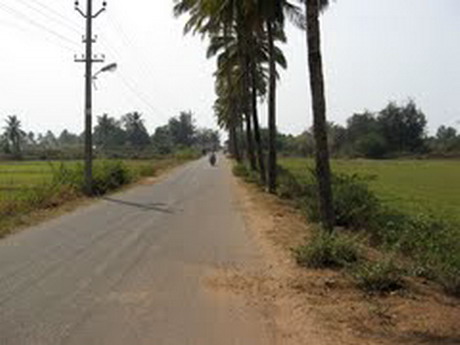
PHOTO 8: road to Palolem
PHOTO 9: near Agonda Beach

Saturday, February 4, 2012

20 years ago today – Day 338


View Larger Map

Tuesday, February 4th – Benaulim Beach to Cabo de Rama, 17,270 km

After a morning swim, shower and our last meal at Pedro’s, Frank and I set out south along the sandy beach. It is a short ride, about four kilometres, until we get to Varca Beach, which we can tell because it has a welcome sign by a beach bar. It is pretty quiet here, even quieter than Benaulim, but the bar doesn’t look as nice and there is only one set of cottages nearby.

There is a thicket of coconut trees at Varca, denser than I have seen before. From the beach there is a scenic, palm-lined country road that twists and winds through the farms to reach Colva Road. Dogs are barking as we pass. Some run as far as the road towards us but none of them attack. I have my water bottle ready just in case, to squirt them up the nose when they get close. That’s a trick I learned from a friend when cycling around Lake Ontario three years ago. It certainly catches them off-guard without hurting them.

It occurs to me that no dogs have barked at us or chased us in India until now. After thinking about it for a bit, I realize that in India dogs must scavenge for their food and they know that they must survive by their wits and be nice to people to get what they need. In Goa, however, people feed their dogs like they do in Europe, a habit acquired from the Portuguese, and dogs will usually try to protect the home that provides for them.

We cross Colva Road when we get to it, aiming for the village of Orlim. It has the only bridge over the Sal River, which would block our way south on other routes. The village has a quaint, whitewashed Catholic Church in the Portuguese style. We stop here briefly for a break before crossing the short bridge.

I get the feeling, with the small, often ill-paved roads, overhanging trees, the quaint Christian churches and equally numerous roadside bars and restaurants, that I am riding on an island in the Caribbean. Frank says he has never been there, but he think Jamaica would look like this. I wonder if the Christians here are as evangelical and unquestioning as they are in the Caribbean.

In a couple kilometres, our tiny road joins a bigger road heading south. It leads us to a slightly longer crossing of another branch of the Sal, by a naval academy. It continues south, parallel to the coast, until it ends at a T-intersection. From here we head to the coast and the estuary of the Sal, where more than a dozen fishing boats are parked on a small beach beside the road.

From here, the road climbs into low hills, bending around forest hills that afford some views of the ocean nearby. Once we lose sight of it we know to watch for a road leading to Cabo de Rama, where the abandoned fortress is. We stop at two roads that prove to be very short and dead-end before we find the one we are looking for, marked by a small, weather-beaten sign in Portuguese and Hindi.

The road is dirt. It climbs, falls and changes direction a few times before it climbs onto an open plateau covered in low shrubs and grass, with palms on the sides of the hills above the beaches below. The fort is only three kilometres from the road but it takes us fifteen minutes to reach it on the rough road. It is not large compared to other fortresses I have seen on my trip, except maybe the Fortress of Prince Henry the Navigator in Sagres Portugal. Yes, I have come full circle, from arriving at that fort on my second week into my trip to arriving in this Portuguese fort halfway around the world on the second last week of my trip almost eleven months later.

The fortress is just a shell, made of large, heavy-looking sandstone blocks. The walls are only about five metres high. Dead grasses cap the tops of its walls and small shrubs have taken root on its sides – even a couple trees in places – as nature sets about tearing apart what man has left behind.

Inside the walls it is mostly an empty courtyard, not very large, with a few shrubs and a rusted cannon barrel that probably weighs a couple hundred kilos. There are some blocks knocked off the walls that are lying at the base of the walls. We surprise a gang of local monkeys who live nearby. This is probably one of their playgrounds. They scamper away before I can get my camera out.

It’s dead quiet here. There are no other visitors and there were no vehicle tracks on the road in. There aren’t even any ships visible on the sea at the moment. The fortress is the only sign of human existence, and it looks like a remnant of an extinct civilization that has been forgotten.

The courtyard, being flat, is a perfect place to pitch our tent, and it gives us protection from the breezes that accelerate as they cross the top of the bluff. Frank sets up his stove and we make our dinner of dried noodles and soup which we bought in Margao. We have fruit for desert. There is no water here other than what we have brought with us. We don’t have enough to wash the dishes so we wipe them mostly clean with sand and tie them into a plastic bag to wash at our next stop.

After dinner has been cleaned up, we walk around the bluffs near the fort and then sit on the decaying walls to watch the sunset. “This is the life,” Frank says, and I agree with him, but I add silently to myself that I am grateful to have someone to share it with.


PHOTO 1: leaving Benaulim Beach, riding the sand again
PHOTO 2: the coconut grove
PHOTO 3: Colva Road
PHOTO 4: Orlim Church
PHOTO 5: headland of Cabo de Rama
PHOTO 6: fortress walls at Cabo de Rama
PHOTO 7: inside the fortress walls
PHOTO 8: sunset at the cape

Friday, February 3, 2012

20 years ago today – Day 337

Monday, February 3rd – Benaulim Beach

I had a great sleep. There are mosquito nets to drape over the bed at night but there aren’t many mosquitoes buy the beach. It is cool enough with the sea breezes to sleep without the fan on. I find the sound of waves very relaxing.

We head over to Pedro’s to have breakfast. He makes us pancakes with local fruit on the side. We chat briefly with the other guests but they keep most to themselves, which is fine with us. After breakfast is digested I go for a swim. There are other crabs in the water, large red ones that hold up their claws towards me menacingly as I swim over them. They are the only interesting sea life I see, except for a skate.

Most of the day I lie on the beach and read. Frank is beside me sometimes and at other times off taking a walk. We both like to explore by nature. A day or two of this is fine but I’d go crazy just lying around uselessly working on a tan. I like lying naked on beaches when I can find them. Marcia and Craig say there still are some secluded one in north Goa. Frank says he’s sunbathed naked on the dunes in Holland. I am thinking as I lie here what it would be like for me lying nude with him. I’ve seen his hunky body naked a few times after his shower. The scenery would certainly be good if he was there, but there is no point fantasizing about men I cannot have. It would seem disrespectful too, as he has been such a good friend.


I return to the cabin with him to make sandwiches for lunch, to save money and to eat our groceries before they spoil in this heat. Then it’s back to the beach for more bathing and a swim before I retreat to the shade on Pedro’s patio. The local fishermen return a bit earlier today so I walk down to meet them. They are relaxing and chatting. They had no catch today. Of course, they ask where I am from and I tell them I am traveling by bicycle. They think I live an idle life to be doing a trip like this, and compared to them perhaps I do. One of them sees my hands and he lifts one up to show the others how soft and smooth it is. He shows he his. It is so heavily calloused from working the ropes on the fishing boats that it looks like a foot.

I return to Pedro’s to look for Frank. I find him in the cabin showered. After I have my turn rinsing off the salt water we head back to Pedro’s for another delicious meal and a drink. It is lovely here but I am already restless. The quiet is pleasant but boring. We discuss where we want to go from here. There is an abandoned Portuguese fort at Cabo de Rama about 60 kilometres south of here according to our map, but I can find nothing in our guide book about it. “Perfect,” Frank declares. “We should definitely check it out before they put it in the guide book.” “It’s a plan,” I say. I love this guy’s attitude!


PHOTO 1: Benaulim Beach from Pedro's
PHOTO 2: local fishing boat on Benaulim Beach

Thursday, February 2, 2012

20 years ago today – Day 336


View Larger Map

Sunday, February 2nd – Colva Beach to Benaulim Beach, 17,190 km

It is a cloudy morning though it looks like it might burn off. Our crummy room doesn’t have hot water this morning so my shower is very short. Frank doesn’t much like our place. His bed was rather lumpy and he did not sleep well. He suggests that instead of looking for another dump in this run down tourist town, we should move onto Benaulim Beach, away from the noise and commercialism of Colva. I agree, but I want breakfast first. We find a place by the beach with a patio that serves coffee and breakfast.

We pass by at Longuinhos before we go to say goodbye to anyone we might see from last night, but I suppose they are doing something else or still in bed. We ride on the service roads to get there, first riding into Margao to check out the covered market, which we have been told is very good. It is so close, only 7 km away, that is a way to pass part of the day.


Margo is the main commercial town of south Goa. It is pleasant enough with several Portuguese-styled buildings, but it’s got very little to offer a traveler in the way of sights. We poke around the market for an hour, buy fruit and sandwich supplies and then make our way through a maze of side roads to get to Benaulim Beach. By now the cloud cover has burned off and the sunshine is warm enough to make the shade inviting.

Benaulim is quiet compared to Colva. There are two sets of cottages at the end of the road, L’Amour Beach Resort and O Palmar Cottages, and beyond them there is Pedro’s Bar and Restaurant, right at the edge of the beach. The cottages are the same price at both resorts but L’Amour looks nicer and the staff are very friendly. The cottages with two beds are only 80 rupees per night (very affordable) and they have ceiling fans and full bathrooms. They seemed to be lined up to catch the cool sea breezes and Pedro’s is only 50 m away.

Pedro’s Bar and Restaurant seems to have the whole beach to itself. It isn’t that large, perhaps thirty chairs not counting the bar stools. Pedro tends the bar. He’s a Portuguese/ Indian mix, an attractive man made more attractive by his smile. He lives at the back of the restaurant with his wife and one daughter. I’d guess he’s about 40.

There are maybe a dozen others in the bar when we arrive, which is now mid-afternoon. Most are guests of the two sets of cottages, but there is at least one couple from the village of Benaulim about a kilometre from the beach. The bar has a very nice atmosphere, relaxed and quiet. There is no music blaring like there is in many bars in Colva. The patrons are a bit older too, more my age than Frank’s, but he seem to enjoy it much better than the ones in Colva. We have all the time in the world to hang around noisy establishments when we get home he tells me.

Eventually we move out to the patio, in the broken shade of a palm tree, to watch the fishermen pull onto the beach with their catch. It is a modest catch. Pedro leaves his wife Isabella in charge of the bar while he goes to pick out the best fish before they haul their catch off to market in Margao. He returns to the bar and Isabella goes of the restaurant to wait for them to unload the purchase.

We stay for dinner to enjoy the fresh catch. There are no other options unless we ride to the village a few minutes away, but it proves to be a delicious option. I have a pomfret stuffed with something spicy and Frank has the prawns in a curried coconut milk sauce.

The sunsets are incredible here. We watch today’s with rum and coconut drink, and then sit out on the sand after dark to watch the waves. We stay very still to see if the scampering white crabs will eventually emerge while we are there. They don’t.


PHOTO 1: Goan Catholic church
PHOTO 2: traffic in Margao
PHOTO 3: Margao's covered market
PHOTO 4: the way to Benaulim Beach
PHOTO 5: Pedro's Bar & Restaurant
PHOTO 6: sunset at Benaulim Beach

Wednesday, February 1, 2012

20 years ago today – Day 335


View Larger Map

Saturday, February 1st – Velsao Beach to Colva Beach, 17,173 km

Frank and I agree that this part of our respective trips is about leisure. It is warm and relaxing here, just what the doctor ordered. But sleeping in a tent is not conducive to sleeping in. The strange bird sounds and the rhythmic chanting of the waves makes me feel alike and I want to get up. Fernando and Maria have coffee ready but the time we have had our showers and packed up our tent and gear. This is all done in the most carefree pace. Fernando cooks up a great breakfast for us. Although we are paying they come sit with us like friends.

We have a swim before we get ready to leave. We load up our bikes as say our goodbyes. Frank wants to use the beach like a highway, a magical break from dealing with cars, scooters, trucks and buses. Where else have I ever ridden for hours down an endless, empty golden sand beach. In Canada, unspoiled beaches are still littered with seaweed and driftwood, but not here.

But it remains to be seen if this will work. Frank has wide mountain bike tires that resist sinking into the sand, but my tires are only an inch and a quarter (3.2 cm) wide and they sink in quite easily in the dry sand. Frank has to keep waiting for me until I figure where it is best to ride. That turns out to be on the outer edge of the wet sand, where the occasional aggressive wave will reach. Here the sand is packed without being too wet to be mushy.

This is so incredible. The beach is 100 m wide with palms, dunes or the occasional building on the outer edge. There no people here, just tracks of scooters or cars once in a while. A jeep passes us at one point, but generally we are alone in the sunshine. If Indians visit the beach, they come to walk along a boardwalk fully clothed to take the air, but not to bathe or tan and preferable not to walk on the sand. It goes on like this, kilometre after kilometre, with only fishing boats and distant ships on the sea. There is a soft, warm breeze and not a care in the world, no destination we have to reach. Frank just keeps grinning at me like he is in heaven. I am sure I am doing the same.

It feels like it will never end but in fact we are only cycling like this for an hour and a half. Still, it is totally memorable. Then we come across Colva Beach, the first festering sign of tourism that we have seen. It isn’t that bad yet, and in fact I would have thought this would be ideal if I was truly alone. There are fishing boats pulled up on the sand and beach resorts with lots of adjacent cabins and dozens of Western tourists and backpack types lying on the sand or sipping Margueritas on patios in front of the resorts. I have a mixed reaction to seeing all of this casual activity after having the amazing beach all to ourselves. This isn’t real India, or real Goa, but they are not the snooty type of middle class, middle aged tourists either.

We stop at Longuinhos Beach Resort first, the first one we see right out on the beach, but the prices for accommodation are much higher than what we have been used to. We like its thatched roof look though so we have a drink on the patio before continuing on to the town proper, half a kilometre further along a beach side road. There are many places with rooms and cottages, some attached to restaurants or bars. We settle for a place called Vailankanni Cottages, a block further from the beach on the road to Margao, the main town in south Goa. These cottages, being two blocks from the beach, are less than a third of the cost of Longuinhos. They are not as pretty but we don’t need to hang out here.

The stroll around the town, which is mainly resorts, bars, restaurants, places to rent bikes and a couple quiet churches. We find a restaurant with a patio and sip mango lassis at the bar while we wait for a table and our food. It is very easy to meet other travelers. We chat with several, including Germans, New Zealanders, South Africans, Israelis, Canadians and a Belgian woman. We are asked a couple times whether we are looking to share a house with other travelers, much like Mike and I did in Sagres, Portugal, at the end of the second week (Day 14).

But we aren’t staying here more than one night. Frank dislikes the party atmosphere and after our ride on the beach today, I rather agree with him. Still, we make the most of it for one night. We end up walking back to Longuinhos to sit at their beach side patio. The crabs are more obvious here with the brighter patio lighting. They glow white against the black night as they dart back and forth chasing the waves.

When it is time to return to our the cheap hotel we walk along the beach. The noise of the bar, which seemed fine when we were there, seems so loud and vulgar against the rustling of the palms and the slurping of the waves as walk away from the light. Gratefully, we have five minutes of near silence before we get to the next bar. Crabs of all sizes streak away from us, as fast as a frog’s tongue, as we approach, each disappearing into some invisible hole in the sand. They aren’t taking any chances. They wait until we are at least 30 m away before they re-emerge.


PHOTO 1: beautiful Frank
PHOTO 2: looking back north towards Velsao Beach
PHOTO 3: my silhouette (midday) with fishing boats
PHOTO 4: Longuinhos Beach Resort bar late in the day